From $300 a month to $12K online: how a kids' boutique found its growth engine
Rosa has run kids' retail for 20 years. Her shop, My Urban Toddler, is the kind of store parents trust: curated, educational, beautiful products, picked by a working mom who has already done the research so you don't have to.
In the store, that expertise sells itself. Online, it didn't. The website brought in $200 to $300 a month.
A year later, My Urban Toddler had the biggest online month in its history: over $12,000. That is roughly 40 times where Rosa started. And it was not a one-off spike. The momentum is still building.
“My online sales were about $200 to $300 a month, and now one year later, we reached our highest online sales of over $12,000. And we're so excited because the trajectory is that this month we are on target to double that.”
Rosa, My Urban Toddler
Here is exactly how she did it, and why none of it required a giant catalog, a big team, or a big budget.
The numbers
- Online sales went from $200 to $300 a month to a record month of more than $12,000.
- Online orders went from 15 in July to 62 in August.
- Meta ads returned more than 4x in August, and about 6x on her top product.
- She started at about $50 a day in ad spend.
A great store that looked like every other store
Foot traffic is unpredictable. One slow summer can hurt a boutique fast, and Rosa knew online had to become a real channel, not a side project.
But online, My Urban Toddler looked like a lot of boutiques: a generic gift shop running product-by-product, seasonal ads. That hid the one thing that made Rosa valuable. Twenty years of curation, and a working mom's eye for what actually helps.
So the first move was not an ad. It was positioning. My Urban Toddler became a guide for busy moms, with one simple promise: we take the guesswork out of parenthood. The site got cleaned up too, with filters on the main collections so a busy parent could find the right thing in a few taps.
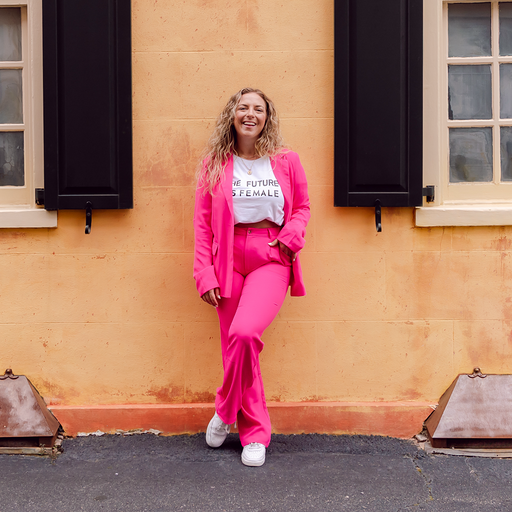
“In the store, Rosa's staff can walk you to the right five products and tell you why. Online, none of that came through. Our job was to put her expertise on the website and in the ads, so moms trust her before they ever walk in.”
The turning point: one thing, all in
The first months laid the groundwork. The breakthrough came from focus.
By midsummer, Rosa was stretched thin. Too many initiatives, none of them getting enough attention. But she was sitting on an advantage nobody nearby had: a collegiate license. She was the only children's boutique in her area allowed to sell Michigan gear.
So she cut everything else and went all in on two things: Michigan collegiate apparel and back-to-school.
With her coach, she co-designed a new, more affordable Michigan sweatshirt with a strong margin. It sat next to her $119 sweaters and opened the collection to far more buyers. Then the site was rebuilt around it: a Michigan Collection in the main menu, a homepage hero for the line, and a 10% off pop-up to capture emails.
One message, running everywhere. Ads, email, and the shop floor, all pointing the same direction.
Ads that were simple on purpose
The August back-to-school campaign was not clever. It was disciplined. Broad targeting, so Meta could find the buyers instead of guessing at interests. Eight to ten different ads before any real budget: images, carousels, video, and an ad in Rosa's own voice. The 10% first-purchase offer in every ad, matched to the pop-up on the site. And a check-in every three days, not every hour.
It worked fast. Pre-order sweatshirts sold about 60 units in two weeks. Return on ad spend held above 4x. Online orders jumped from 15 in July to 62 in August, more than four times in a single month.
And the winning ads were not fancy. A photo of two girls in U of M sweatshirts. An organic post reused as an ad. A simple picture of a mom and her kids. Real, warm, and clearly hers.
Rules instead of guesswork
Once ads are working, the danger is scaling too fast or panicking too early. So Rosa got simple written rules she could follow on her own.
- Raise budget in steps, $60 then $75 then $100 a day, holding three to four days between each.
- Expect results to dip a little while scaling. Hold steady as long as you are above break-even.
- Turn off an ad only after it has spent real money, around $100, and is still below break-even.
- Leave low-spend ads alone. They are not hurting anything.
- Launch two or three fresh ads a week to stay ahead of creative fatigue.
By September, her top Michigan sweatshirt ad was running at roughly 6x, and Rosa pushed it from $90 to $120 a day with confidence. Michigan State gear got its own campaign, because U of M fans and MSU fans are not the same buyer.
The dip, and the boring fix
Growth is never a straight line. In mid-September, results dropped below break-even.
Most owners would slash the budget or blame Meta. Rosa dug in instead and found three simple causes. Ads were sending people to the homepage, making them hunt for the sweatshirt they had just clicked on. The same creative had been running for weeks. And pre-order messaging on sold-out sizes was slowing buyers down.
The fix: point every ad to the right collection page, build five new ads, put spend behind products actually on the shelf, and give it a week or two before touching the budget.
“A bad week isn't a verdict. Before you cut anything, check the basics: where is the ad sending people, how old is the creative, and can they actually buy what they clicked on? Nine times out of ten, the fix is there.”
Growth broke a few other things too, in the best way. Navy sweatshirts sold down to five units. Restocks had lead times. Rosa learned to plan inventory ahead of the ads, with clear pre-order dates so momentum never stalled. A tailgate pop-up outside Michigan Stadium turned into an organic post with 23,000 views.
The next lever: email
Ads bring new customers in. Email brings them back. Rosa already knows how much repeat buyers matter: one loyal customer alone has placed 110 orders.
Right now email drives about 12% of her revenue, against a typical 25 to 30%. That gap is the next big win. She has taken email back in house, rebuilt her welcome flow, and her new pop-up added 38 subscribers almost immediately. Next up is the holiday season, with gift guides telling the same story across email, ads, and landing pages.
“Once one mechanism is working and then you introduce another one, they work together exponentially.”
Rosa, My Urban Toddler
Where it goes from here
The collegiate line keeps growing. A 2027 capsule collection is approved, with father-and-son golf polos and quarter-zips planned for Father's Day, plus women's activewear. Rosa is even weighing whether the line deserves its own brand name to reach dads and adult fans.
The real win: confidence
Ask Rosa what changed most, and she does not start with revenue.
“The thing that has changed the most about me is that I feel more confident. I feel less like an imposter and more like a CEO.”
Rosa, My Urban Toddler
With ads running on rules instead of guesswork, she finally has room to work on the business instead of in it.
“Outside of revenue, I learned to trust myself. I learned that I have experience.”
Rosa, My Urban Toddler
The people she works with
Brittany AshtonGrowth AdvisorHer coach. Led the repositioning, the all-in bet on the Michigan line, and the ad rules Rosa runs on.
 Austin FrederickBack-End Coach
Leads email, SMS and retention, so every customer the ads bring in has a reason to come back.
What this means for your store
Rosa did not have a huge catalog, a big team, or a big budget. She started at about $50 a day. What changed was the approach: one focused offer only she could sell, a simple ad setup with written rules, and a site and email setup that catch the traffic the ads send.
Every store has an unfair advantage. Hers was a license and 20 years of trust. If online still feels like an afterthought for your store, your version of the Michigan sweatshirt is probably already sitting on your shelves. Rosa went from $300 a month to $12,000 by finding hers.
Frequently asked questions
How long did it take My Urban Toddler to see results?
About a year from starting to a $12,000+ online month. The early months went into positioning and cleaning up the site. The biggest jump came within weeks of going all in on the Michigan collection in August.
How much did she spend on ads?
She started around $50 a day, then scaled in steps to $100 to $120 a day on her top product once the numbers proved out.
Can a small local boutique really compete online?
Yes, when it leans into what makes it different. Rosa's edge was a collegiate license and two decades of trusted curation.
What should I do when my ads suddenly stop working?
Check the basics before you cut budget: where the ad sends people, how old the creative is, and whether the product is actually in stock. For My Urban Toddler, fixing links, refreshing creative, and pushing in-stock products turned a September dip around.